Kratom vs 7-OH and its potential dangers
BISMARCK, N.D. (KFYR) - Last week, Gov. Kelly Armstrong declared a public health emergency, and next month, state lawmakers will head back to the Capitol for a special session on kratom.
Kratom has been sold alongside energy drinks in convenience stores and smoke shops across North Dakota—completely unregulated, with no age limits.
Now, state leaders are rushing to ban the substance.
To some who use it, kratom is a natural supplement used to manage pain or boost energy. To state officials, it is a public health crisis waiting to happen.
The substance is a tropical leaf native to Southeast Asia that contains psychoactive compounds.
In low doses, it acts as a stimulant. In high doses, it binds to opioid receptors. Experts say the real danger comes from concentrated, synthetic derivatives, such as 7-OH.
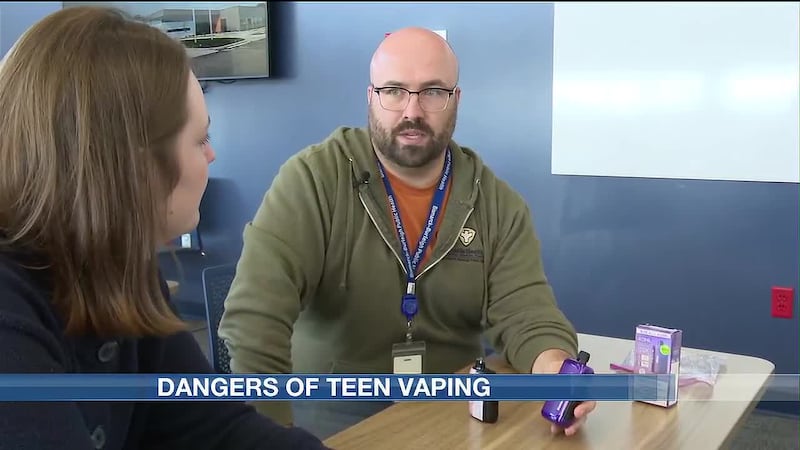
“Those products that are synthetically created and into an ultraconcentrated form of 7-OH or those other alkaloids in a way that make them extremely dangerous,” said Mark Hardy, the executive director of the North Dakota Board of Pharmacy.
7-OH is significantly more potent, highly addictive and lacks any of the natural plant’s balancing compounds.
While raw kratom leaf contains a mix of alkaloids, 7-OH is a single, highly isolated and concentrated compound.
State officials said these products are often marketed as colorful, candy-like tablets and gummies, directly targeting younger people.
The North Dakota Board of Pharmacy declared 7-OH as a Schedule I drug—putting it on par with heroin.
“They’re all considered natural supplements, and of course there is no consistency in how they’re formulated and consistency in product lines. You know, I want to make sure that’s real clear to the public, that there are a lot of inconsistencies in these products and how they’re formulated and what may be contained within them as well,” said Hardy.
The governor’s emergency ban only lasts 30 days. To make it permanent, state lawmakers will convene in Bismarck for a special legislative session beginning Sept. 2.
This week, lawmakers in a working group will meet to hear comments from the public on the substance. The group is drafting legislation for the special session.
Copyright 2026 KFYR. All rights reserved.