Duck numbers drop in ND, but recent rain helps
BISMARCK, N.D. (KFYR) - The results are in on the long-running breeding duck survey, where biologists count ducks in social groups by species and look at wetland conditions.
“We had the 52nd highest May pond count on our survey. That’s out of 78 years. The pond count itself was down 38% from last year. So, conditions were pretty dry. And that affected how ducks settled in the state,” said NDGF Migratory Game Bird Management Supervisor Mike Szymanski.
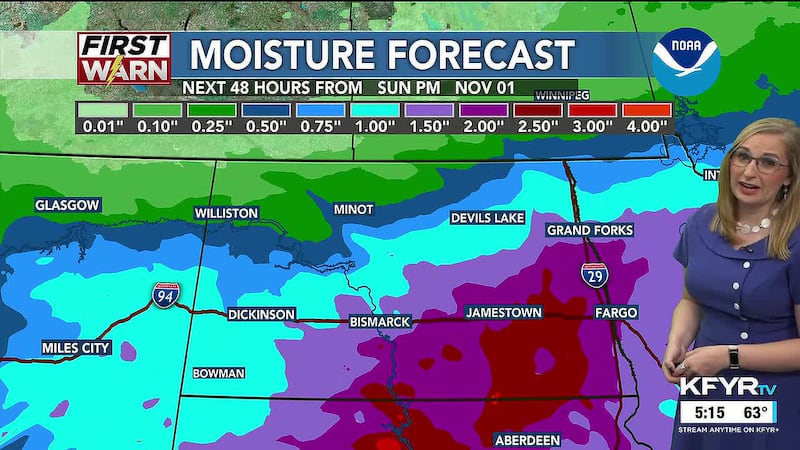
Much-needed rains arrived following the completion of the survey.
“The western part of the Missouri Coteau received between four and seven inches of rain. And then the central part of the state got around four inches of rain, which greatly improved wetland conditions of basins that already had water, helped soil moisture conditions, and brought back some temporary wetlands that pairs use to initiate their breeding activities in the spring, so helped a little bit,” Szymanski said.
North Dakota has long been labeled North America’s duck factory, but numbers here and elsewhere are declining.
“We were down to 2.66 million as our estimated May breeding population of ducks in the state. That’s down about 9% from last year. The mallard population estimate was down 26% from last year and is the lowest estimated mallard breeding population on our survey since 1993. Blue-winged teal, green-winged teal, and pintails also had significant population declines, whereas gadwall, shovelers, and ruddy ducks had a somewhat less significant declines. We did have a few species that showed increases from last year on our survey. That would be wigeon, canvasbacks, redheads, and lesser scaup,” Szymanski said.
There are some things that need to happen on the landscape for duck populations to start heading in the right direction.
“To see duck populations rebound in North Dakota and do well and provide good opportunities for hunters, we’re going to have to have more grass come back to the landscape. We need more upland nesting habitat. We’ve got to have good wetland conditions, too,” Szymanski said.
The Canada goose estimate was down 15% from last year; however, they are still very abundant in the state, with an estimated 213,000 in the breeding population.
Copyright 2025 KFYR. All rights reserved.