Blowing dust creates visibility issues
BISMARCK, N. D. (KFYR) - Wildfires have a lasting impact on a landscape far more reaching than most would think.
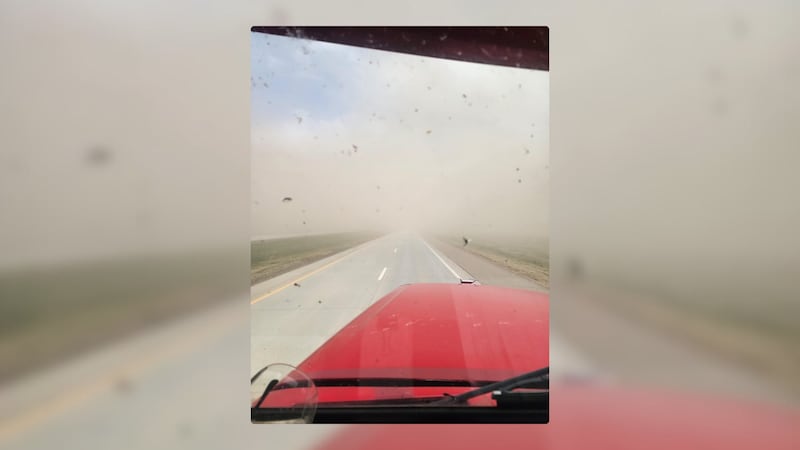
On May 5, we had a very rare occurrence in northwestern North Dakota. A video was sent to us by a viewer driving down Highway 2 between Ray and Tioga. In it is not smoke or fog. It is blowing dust.
When there are strong winds over dry land that also has little to no vegetation, we could see blowing sand or dust.
The airborne dust and sand can cause several issues like reduced visibility and respiratory problems and can be abrasive on machinery. Much like a fog advisory for reduced visibility, there is a blowing dust advisory.
A blowing dust advisory will be issued when visibility drops between a quarter to one mile due to the blowing dust. There is also a blowing dust warning issued when visibility drops under a quarter of a mile. Both the advisory and warning are issued for a duration of 90 minutes or more.
We had a dust storm advisory issued in McKenzie, Williams, Billings and Golden Valley Counties on Monday afternoon. The advisory warned of visibilities under a mile, at times, with a few reports even lower.
This dust was likely coming from the burn scar left over from the October fires between Ray and Tioga. The burn scar would be dry dirt and dust with very little vegetation since we are still early in the spring.
The opposite problem—too much precipitation—can also lead to hazards near burn scars. Debris flows are caused when a dry landscape is overrun with water mixed with mud, soil, rock and possibly other debris, much like a landslide.
If you are caught driving in a dust storm, pull off to the side of the road as safely as possible, turn off your lights and keep your foot off the break.
Copyright 2025 KFYR. All rights reserved.